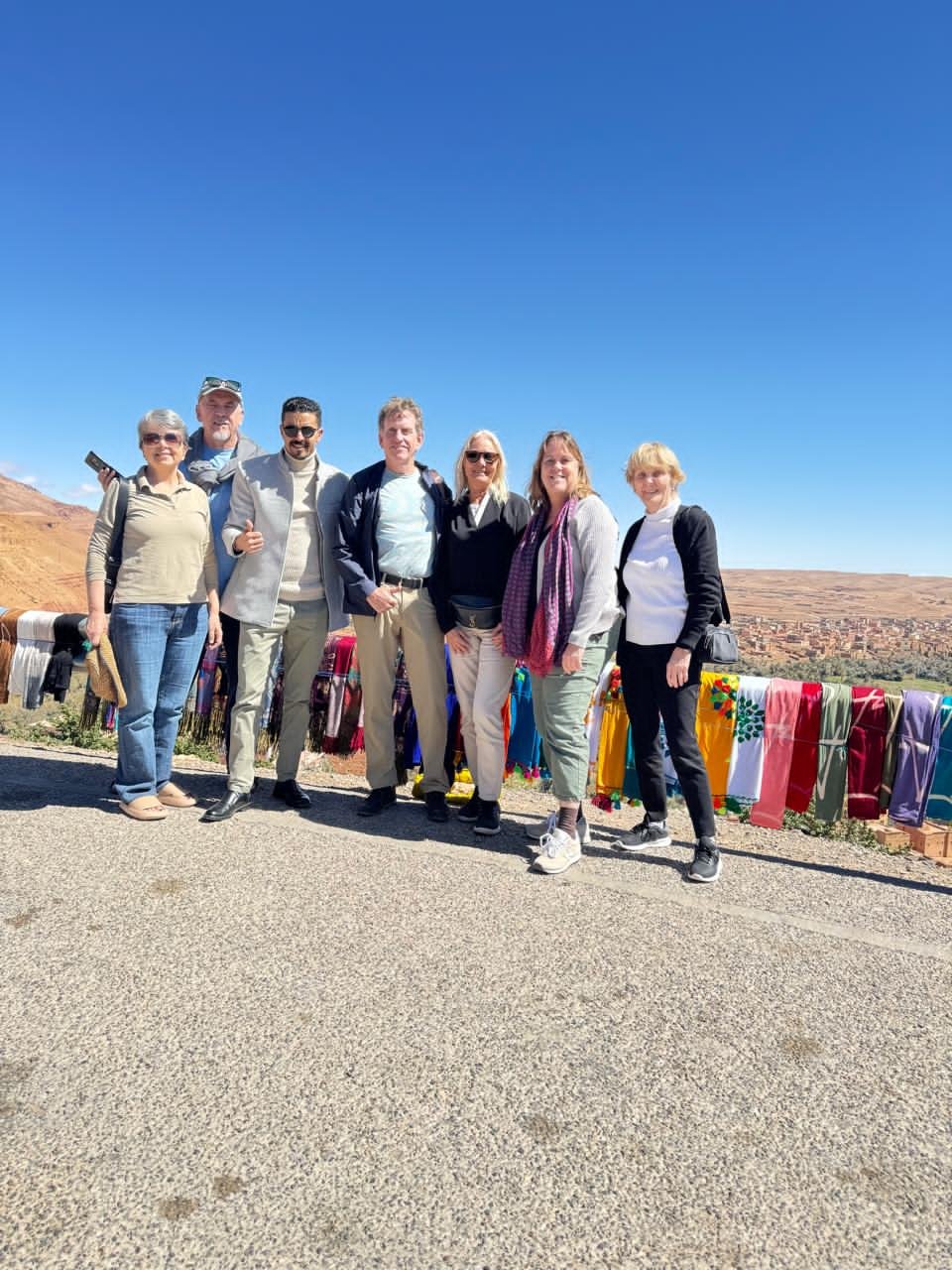
Departing from the Dades Valley, your first visit is to the impressive Amridil Kasbah, one of the best-preserved kasbahs in Morocco and a beautiful example of traditional Berber architecture.
Continue through Boumalne Dades, a town perched at the edge of the valley, where fertile lands and rich agriculture sustain vibrant Amazigh communities.
As you travel across the region, you will pass through the famous Valley of Roses, known for its fields of alfalfa, olive trees, figs, and grapes. This fertile valley is the birthplace of the Damask rose, used by locals to produce soaps, perfumes, and skincare products. The area celebrates its rose harvest every year with a national festival held at the end of April.
Your journey continues to Ouarzazate, often called the “Hollywood of Africa,” “the Silent City,” or “the Gateway to the Desert.”
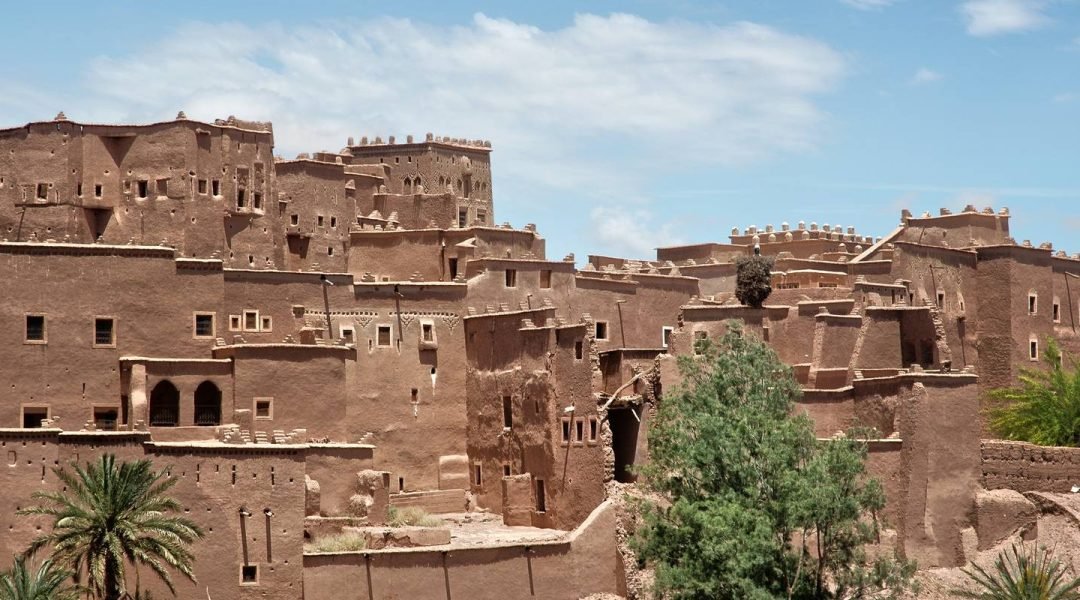
Located on a vast plateau south of the High Atlas, Ouarzazate is home to many heritage kasbahs, including the historic Taourirt Kasbah, dating back to the 17th century.
The city earned its cinematic nickname thanks to its major film studios, where famous movies such as Lawrence of Arabia (1962), The Last Temptation of Christ (1988), The Mummy (1999), Gladiator (2000), Kingdom of Heaven (2005), Kundun (1997), and Babel (2005) were filmed.
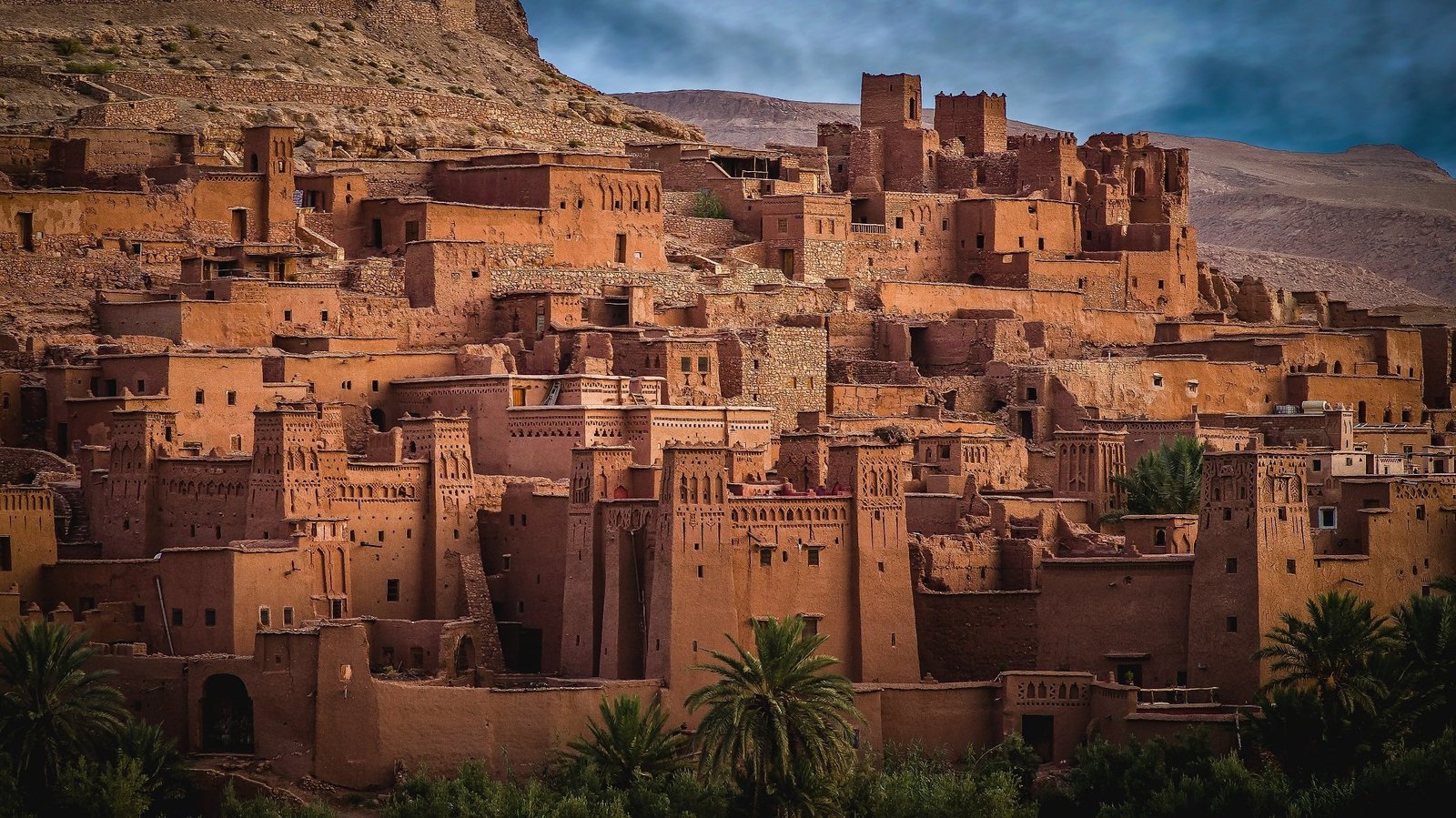
Next, visit the legendary fortified village of Aït Ben Haddou, built in the 11th century. Once an important stop on the ancient caravan route between the Sahara and Marrakech, this ksar stands proudly along the Ounila River.
Many of its centuries-old kasbahs suffer from erosion due to rain and wind, yet a few Amazigh families still live inside the historic walls.
Declared a UNESCO World Heritage Site in 1987, Aït Ben Haddou has also served as a film set for productions like Time Bandits (1981), The Jewel of the Nile (1985), Gladiator (2000), Kundun (1997), and Alexander (2004).
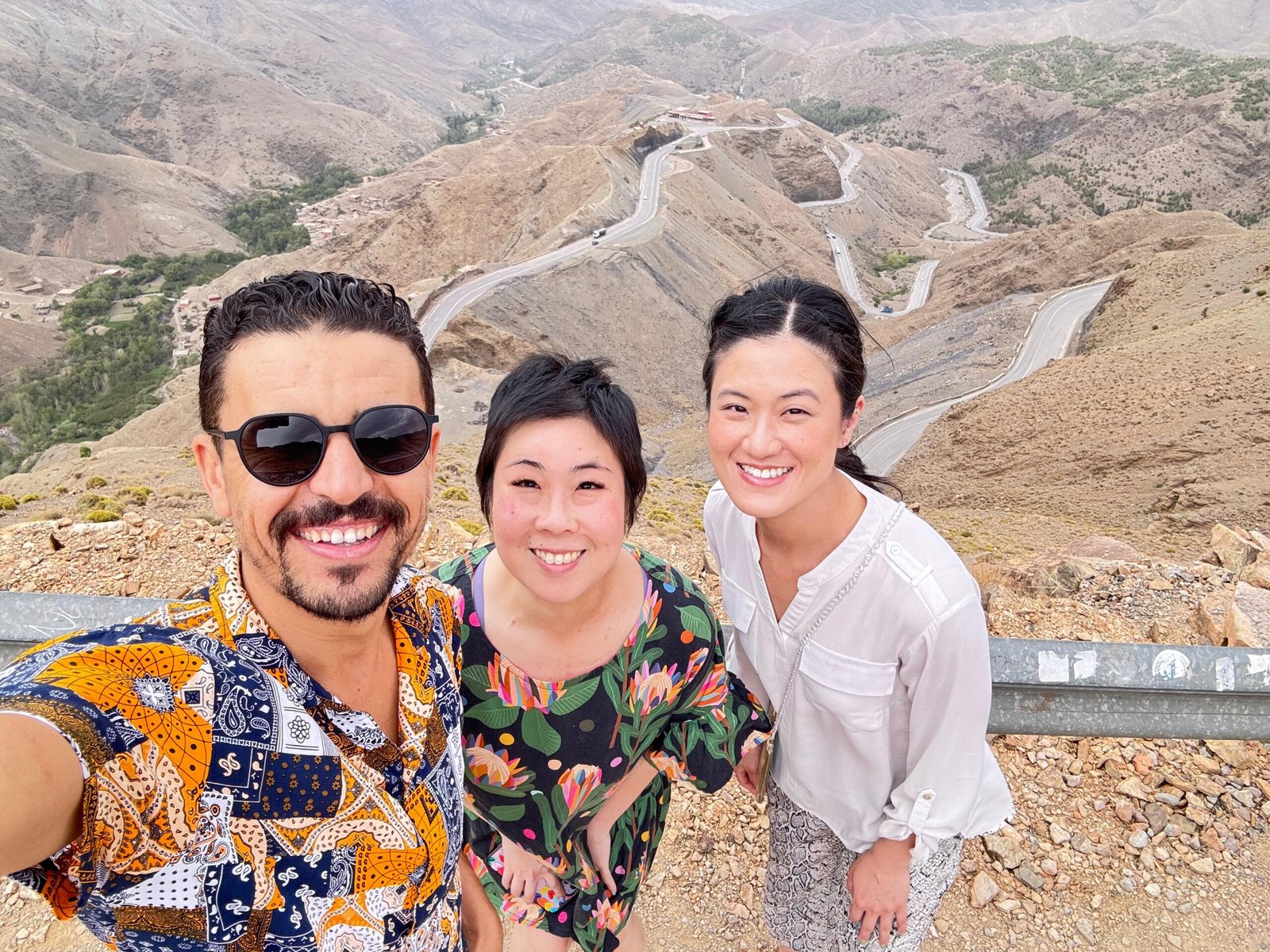
After the visit, drive across the High Atlas Mountains through the scenic Tizi n’Tichka pass and continue toward Marrakech, arriving in the late afternoon.